Growth
Clarity
Startup,

Why the Tikvah Pathways STARTUP READINESS INCUBATION FRAMEWORK?Shifting founders from idea-driven to investment-ready To know more about Tikvah Pathways visit our website:https://tikvahbc-za-143637891.hs-sites-eu1.com/tikvah-pathways
The People Dynamics™ Paradox: Why Your Internal Architecture is the Real Ceiling on Your External Growth
The primary point of failure for Series A startups and scaling enterprises is rarely a lack of funding or a shortage of ideas. It is behavioral misalignment. While founders often obsess over market fit and product iterations, they frequently overlook the invisible friction within their internal structures that eventually brings momentum to a grinding halt. Within the Tikvah Pathways™ Startup Readiness™ ecosystem, we recognize that People Dynamics™ serves as the critical bridge between being "Mindset Ready™" and becoming "Investment Ready™." When this bridge is weak, organizations collapse under the weight of five specific diagnostic failures:
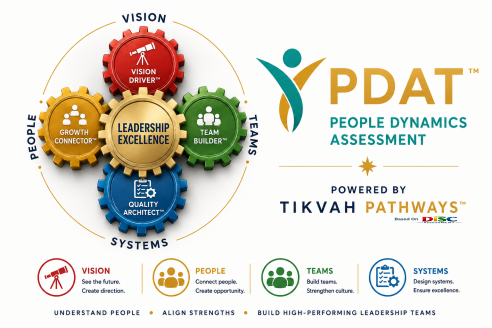
True organizational growth is an internal process before it can ever manifest as an external result. To scale, a leader must stop looking at the market and start looking at the behavioral mechanics of their team. 1. The Growth Paradox: People Before ProfitsIn the high-stakes environment of startup growth, founders often "hide" in the top 10% of the Leadership Iceberg—technical skills and product development. This is a defensive maneuver; skills are easier to measure than behaviors. However, this neglect is exactly why businesses plateau. The Tikvah Pathways™ philosophy is built on a non-negotiable premise: "Businesses don't grow first... People do." If the 90% of the iceberg submerged below the surface—behavior, communication, motivation, and decision-making—is ignored, the organization will eventually strike the failure points of team conflict and systemic poor communication. A founder can have the most sophisticated technical roadmap in the world, but if they lack the self-awareness to manage the motivational drivers of their team, the roadmap will never be executed. 2. The High-Performance Puzzle: Why One Style Isn’t EnoughThe most common diagnostic error made by founders is attempting to be "the hero of all roles" or, conversely, hiring a leadership team of behavioral clones. High performance requires four distinct leadership styles. When one is missing, the organization doesn't just slow down; it begins to suffer specific, predictable forms of "organizational decay."
Founders who attempt to play all four roles inevitably face operational exhaustion. Trying to be the "Vision Driver" while simultaneously acting as the "Quality Architect" creates a cognitive friction that leads to burnout and strategic paralysis. 3. The Recruitment Trap: Skills Are Only the Tip of the IcebergTraditional recruitment is a high-risk gamble because it focuses almost exclusively on "Capability"—the individual's technical ability to perform tasks. However, placing a talented individual in the "wrong seat" is a recipe for organizational friction. To reach "Investment Ready™" status, your recruitment must move beyond the surface. The People Dynamics™ framework mandates a diagnostic approach to hiring based on four distinct criteria:
By aligning the right roles with the right behavioral styles—ensuring your CEO is a Vision Driver™ and your Finance lead is a Quality Architect™—you transform human capital from a source of friction into a source of fuel. 4. Why Your Sales Pitch is Failing Half Your LeadsMisalignment in People Dynamics™ is the silent killer of revenue. Sales teams often fail because they use a "one-size-fits-all" style while selling to four radically different buying behaviors. Understanding the behavioral profile of the customer is significantly more impactful than the features of your product. Consider the strategic pivot required for different leads:
If you attempt to sell a Vision Driver on "data and research," you will lose their interest. If you attempt to sell a Quality Architect on "fast results" without evidence, you will lose their trust. Understanding the behavior of the buyer is the only way to ensure your sales process is truly "Growth Ready™." 5. The Leadership Success Cycle™Sustainable success is not a destination; it is an 8-step repeatable cycle. When any step is skipped, the cycle breaks, and growth becomes a fluke rather than a predictable outcome. The Leadership Success Cycle™ moves through these critical phases:
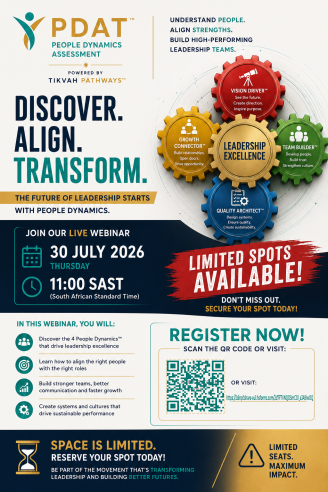
The final step—returning to Vision—is what ensures the organization remains a living, breathing entity rather than a static one. Conclusion: The Beginning of LeadershipThe path to building a high-performance organization does not begin with an external consultant’s report or a new software implementation. It begins with the internal architecture of the leader. Within the Tikvah Pathways™ framework, we emphasize that sustainable excellence is built on a foundation of self-awareness. As the final principle of the People Dynamics Assessment™ states: "Understanding yourself is the beginning of leading others." If your business stopped growing today, would you have the courage to look past your systems and examine your own self-awareness? The answer to that question determines whether you are merely a business owner or a true high-performance leader. Join our free webinar: https://2dinpf.share-eu1.hsforms.com/2d7F7VNQOSmCOl_eJA9IwOQ
To peruse our pathways solutions, and find valuable downloadable resources to set you in the right direction for your startup. Visit our page by clicking on the link also visit the resources page: https://rb.gy/ajil2z Signup to our Newsletter: https://2dinpf.share-eu1.hsforms.com/2MFhN_b1eSwGOR8Ezw-zpNQ |
To know more click here Menu