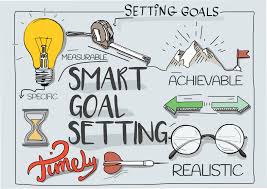
With the start of 2026, I want to help you set some goals for 2026, by doing an inventory on 2025.
Let's start of with some assignments, I know, you don't have to tell me!! We all don't like doing them, but if you are serious about yourself, let alone your business, then journey with me on this one. Let's do them now before we go onto set our goals for 2026.
Assignment #1: go through the year and write down all your business wins.
New clients acquired, revenue milestones reached, systems built, products launched, partnerships formed, lessons learned, and growth achieved — even the quiet progress that didn’t make headlines.
Assignment #2: find the common patterns with those wins. What kind of work keeps showing up? What gives you energy? What stalls you? What was your year actually about?
Now, it’s time for our Assignment #3.
Go back to a coffee shop or quiet place. Bring the notes you made. Give yourself about an hour. No multitasking.
Your intention and focus for this hour can have a force multiplier effect for 2026.
Step 1: What does 2026 need to look like in response to last year?
If 2025 was survival, maybe 2026 is structure.
If it was chaos, maybe 2026 is order.
If it was proof, maybe 2026 is expansion.
Write one sentence finishing this line: “2026 is the year I ______.”
Keep it simple. You’re setting direction, not listing tasks or goals yet.
Step 2: Choose one primary creative focus
Most startup entrepreneurs dilute themselves by chasing too many things at once.
So for this exercise, pick one primary focus for 2026.
Examples:
-
-
finish building and launching a viable business
-
become confident and credible as a founder
-
move from doing everything yourself to leading strategically
-
build a business model that truly reflects your vision
-
develop one strong, validated core offer
-
get consistent results instead of unpredictable outcomes
Write it as a single sentence.
If everything is important, nothing is.
Step 3: Define what “finished” looks like
Ambition without an end point turns into frustration.
So answer this clearly:
What does done look like by the end of 2026?
-
new clients or customers gained
-
revenue or profitability milestones
-
systems or processes implemented
-
products or services launched or improved
-
strategic partnerships or key relationships formed
-
skills developed and lessons learned as a founder
Be specific enough that there’s no debate later.
Step 4: Decide what you’re leaving behind
Write down:
-
one habit
-
one type of project
-
or one distraction
that you are not carrying into 2026.
Progress isn’t just about what you add. It’s about what you stop tolerating.
This is the final piece of the exercise.
You don’t need to show this to anyone.
You don’t need to post it.
You just need to know where you’re aiming.
If you do, the decisions you make next year get a lot simpler.
And if you don’t… the year has a way of deciding for you.