Growth
Clarity
Startup,

Why the Tikvah Pathways STARTUP READINESS INCUBATION FRAMEWORK?Shifting founders from idea-driven to investment-ready To know more about Tikvah Pathways visit our website:https://tikvahbc-za-143637891.hs-sites-eu1.com/tikvah-pathways
From Task-Master to System-Builder: Scaling Your Vision without the Overwhelm1. The Execution Reality CheckIn the landscape of entrepreneurship, a profound structural disconnect often exists between having a vision and owning a venture. While many possess "good ideas," an idea is merely a blueprint without a foundation. Sustainable success is not a byproduct of conceptual brilliance; it is engineered through the founder's ability to transition from passive dreaming to a rigorous execution infrastructure. Without this shift, the most innovative concepts remain stagnant possibilities rather than revenue-generating realities. To build a venture, one must move beyond the "Idea Phase" and into the "Validation Phase," where assumptions are stress-tested against the market.
While re-engineering your approach to favor active execution is the first step toward growth, this increased momentum eventually generates operational friction that manual effort alone cannot overcome. 2. The Founder’s Bottleneck: Why "Working Harder" FailsMost startups begin in a "passion phase" where the founder functions as the central processor for every task. They manage every customer touchpoint, every invoice, and every operational detail. However, as the venture scales, this human-centric model becomes a systemic bottleneck. Increased volume inherently leads to increased complexity, and without a scalable infrastructure, the business’s growth will eventually exceed the founder’s personal bandwidth. When an organization lacks an operational framework, it suffers three primary consequences:
The Fundamental Insight: A business scales because its systems work better, not because its owner works longer hours. To break through this plateau, the founder must stop acting as the "engine" of the business and start acting as its "architect." Escaping the limitations of manual labor requires the entrepreneur to undergo a cognitive shift, re-tooling their internal dialogue to focus on structural design. 3. The Great Mindset Shift: Changing the QuestionThe transition from a struggling small business to a scalable company requires a total re-engineering of the founder’s daily inquiry. It is the move from direct labor to the orchestration of a functional machine. "One of the most important transitions an entrepreneur can make is moving from asking, 'How do I do this?' to asking, 'How do I build a system that does this consistently?'"
Once the mindset shifts from "doing" to "designing," the architect must identify the specific building blocks required to stabilize the business infrastructure. 4. Building Blocks: Practical Examples of Business SystemsIn an architectural sense, a "system" is a documented, repeatable protocol for handling recurring business requirements. By moving these functions from the founder’s intuition into a formalized operational manual, the business becomes a more efficient, modular entity.
By documenting and orchestrating these processes, the entrepreneur begins to realize the "Triple Reward" of a systematized business. 5. The Triple Reward: Freedom, Quality, and SustainabilitySystematization is not merely a quest for efficiency; it is the cornerstone of building a "revenue-generating business" that can survive without its creator. Neville Solomon, the founder of Tikvah Pathways™, identifies three essential outcomes of this architectural approach:
While these rewards are significant, they are only accessible to those who first perform a rigorous audit of their current operational state. 6. Reflection & Action: Assessing Your ReadinessExecution builds the business, but "system-readiness" determines if that execution leads to an investment-grade venture. Before injecting more capital or time into a project, a founder must evaluate the integrity of their foundation. Using the Startup Readiness Assessment™ framework, evaluate your venture across these 7 critical dimensions:
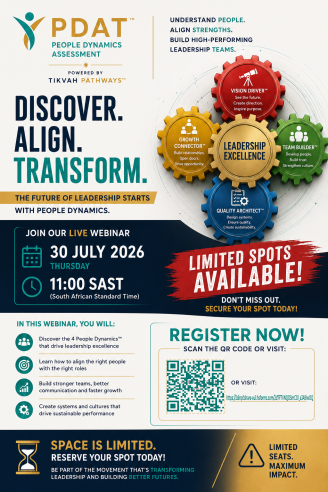
Execution builds the business, but systems sustain it. Ideas provide the spark, but consistent execution, target customer clarity, and a scalable operational framework are the only things that turn a vision into a sustainable venture. Join our free webinar: https://2dinpf.share-eu1.hsforms.com/2d7F7VNQOSmCOl_eJA9IwOQ
To peruse our pathways solutions, and find valuable downloadable resources to set you in the right direction for your startup. Visit our page by clicking on the link also visit the resources page: https://rb.gy/ajil2z Signup to our Newsletter: https://2dinpf.share-eu1.hsforms.com/2MFhN_b1eSwGOR8Ezw-zpNQ |
To know more click here Menu